The Problem Every SOC Faces
A modern Security Operations Center is drowning in data. Thousands of alerts per day, each demanding triage, investigation, and a decision — all while analysts are expected to respond faster than ever. The average SOC analyst spends nearly a third of their day on tasks that don’t require human judgement: copying IOCs between tools, opening tickets, looking up IP reputation, blocking a known-bad hash.
This is where SOAR changes everything.
What is SOAR?
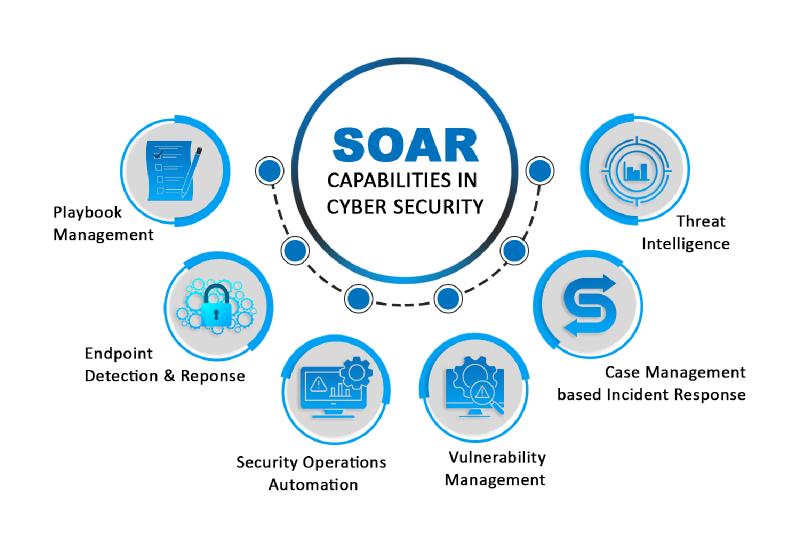
SOAR stands for Security Orchestration, Automation, and Response. It is a platform that connects your security tools, codifies your response processes into automated playbooks, and gives analysts a single place to investigate and act — without switching between a dozen different consoles.
The three pillars break down as follows:
- Orchestration — connecting disparate security tools so they can share data and trigger actions on each other.
- Automation — executing repetitive, rule-based tasks (enrichment, containment, notification) without human intervention.
- Response — guiding analysts through structured investigation workflows and enabling one-click remediation actions.
SOAR does not replace analysts. It removes the noise so they can focus on decisions that actually require a human.
Why SOAR is Valuable in a SOC
1. Cutting Mean Time to Respond (MTTR)
Manual incident response is slow. An analyst receives an alert, pivots to a threat intel platform to check the IP, pivots to the EDR to check the endpoint, opens a ticket, emails the firewall team — each step adding minutes or hours. A SOAR playbook compresses all of that into seconds, automatically, at scale.
2. Eliminating Alert Fatigue
When low-fidelity alerts are auto-triaged and resolved by playbooks, analysts only see the cases that survived automated filtering. Signal-to-noise ratio improves dramatically, and burnout decreases.
3. Enforcing Consistency
A playbook runs the same way every time. There is no variation based on who is on shift, how tired they are, or whether they forgot a step. Every phishing email gets the same thorough treatment at 3am as it does at 9am.
4. Accelerating Analyst Growth
Playbooks are documented, version-controlled processes. Junior analysts follow them to learn the methodology; senior analysts build and refine them. The institutional knowledge stops living in people’s heads and gets embedded in the platform.
Key Integrations
The value of a SOAR platform scales directly with how many tools it is connected to. Below are the integration categories that deliver the most impact.
SIEM
The SIEM is typically the trigger source — alerts and correlated events flow from the SIEM into SOAR, where the response playbook kicks off. Common integrations:
- Splunk ES — rich alert context, notable events, and risk scoring passed directly into playbooks
- Microsoft Sentinel — native integration with the Microsoft security stack; incidents auto-created in SOAR
- IBM QRadar — offense data and magnitude scores used to prioritise playbook routing
Endpoint Detection & Response (EDR)
EDR integrations give SOAR the ability to act on endpoints automatically — isolating a machine, killing a process, or pulling a forensic artifact without waiting for a human.
- CrowdStrike Falcon — contain a host, retrieve process trees, search for IOCs fleet-wide
- SentinelOne — disconnect an endpoint from the network, roll back malicious changes
- Microsoft Defender for Endpoint — run live response scripts, collect investigation packages
Threat Intelligence Platforms
Enrichment is one of the highest-ROI automation use cases. Every IP, domain, hash, and URL in an alert can be automatically scored before an analyst ever sees it.
- VirusTotal — file hash and URL reputation lookup on every alert, score appended to the case
- MISP — query internal and community threat feeds; auto-tag cases with matching ATT&CK techniques
- AlienVault OTX — pulse-based IOC lookups integrated into phishing and malware playbooks
- Shodan — passive reconnaissance on external IPs seen in alerts; service and exposure data added automatically
Email Security
Phishing is the most common initial access vector and also one of the most automatable response scenarios.
- Proofpoint TAP — suspicious message details feed directly into a phishing playbook; SOAR can pull the full email, extract all URLs and attachments, and detonate them automatically
- Microsoft Defender for Office 365 — auto-quarantine and purge malicious emails across the entire organisation from a single playbook action
Firewall & Network Controls
Containment playbooks are only useful if they can actually block traffic. Firewall integrations close that gap.
- Palo Alto Networks — add IOCs to dynamic address groups; update security policies automatically
- Cisco Firepower / FMC — block IPs and domains from SOAR based on threat intelligence enrichment
- Fortinet FortiGate — automated policy updates triggered by confirmed compromise playbooks
Identity & Access Management
Account takeover and insider threat scenarios require fast action on identities.
- Microsoft Active Directory / Entra ID — disable a compromised user account, force a password reset, or revoke sessions with a single playbook action
- Okta — suspend a user, clear active sessions, and push a notification — all triggered automatically on a high-confidence compromise alert
Ticketing & Case Management
Every action taken during an investigation needs an audit trail.
- ServiceNow — auto-create and update incident tickets; SOAR writes timeline entries back to the record at every step
- Jira — development-team-friendly ticketing for vulnerability and patch management workflows
- PagerDuty — escalation integration; if a playbook determines a critical incident, PagerDuty fires the on-call rotation automatically
Collaboration & Notification
Real-time communication keeps the right people informed without requiring analysts to send manual updates.
- Microsoft Teams / Slack — automated incident notifications posted to dedicated channels; analysts can approve or reject playbook actions directly from a chat message
- Email — stakeholder notifications with incident summaries generated and sent by the platform at defined milestones
A Playbook in Practice: Phishing Response
To make this concrete, here is what a SOAR phishing playbook looks like end-to-end:
- Trigger — User reports a suspicious email; alert created in the SIEM or email security platform.
- Extraction — SOAR parses the email: sender, reply-to, subject, all embedded URLs, all attachments.
- Enrichment — Every URL and hash is submitted to VirusTotal and MISP simultaneously.
- Verdict — If any indicator scores above the threshold, the playbook branches to confirmed malicious.
- Containment — Email is purged from all mailboxes via Defender for Office 365. Sender domain blocked on the email gateway.
- Endpoint check — SOAR queries the EDR: has any endpoint executed the attachment? If yes, the affected machine is isolated.
- Identity check — If the user clicked a link, Active Directory account is flagged for forced password reset.
- Ticketing — A fully enriched incident ticket is created in ServiceNow with the full timeline.
- Notification — Teams message posted to the SOC channel with a one-click approve/escalate button for the analyst.
Total elapsed time: under 90 seconds. Without SOAR, this process takes 20–45 minutes of manual work.
Challenges to Keep in Mind
SOAR is not plug-and-play. A few realities to plan for:
- Playbook quality depends on process quality. If your current process is poorly defined, automating it produces faster bad outcomes. Document and validate your runbooks before building playbooks.
- Integration maintenance has a cost. APIs change, credentials expire, tool versions update. Someone needs to own platform health.
- Overly aggressive automation can cause harm. Auto-isolating endpoints or disabling accounts without confidence thresholds tuned correctly will disrupt business operations. Start with enrichment-only automation and introduce containment actions gradually.
Conclusion
SOAR turns a reactive, manually-driven SOC into a proactive, intelligence-driven operation. By orchestrating the tools already in your environment, automating the work that should never have required a human, and structuring response so that every analyst follows the same best-practice process — SOAR is the single highest-leverage investment a mature SOC can make.
The question is no longer whether a SOC needs SOAR. The question is how quickly it can get the integrations right.